
Learn how to SAFELY tune your piano
T (819) 769 1407
Email: admin@pianotuninghowto.com
Piano Tuning How To
401 Avenue Des Aunes, Magog, CA

THIS PRODUCT IS DOWNLOADABLE
INSTANT ACCESS
START NOW!
Start saving money by performing touchups yourself between your tuner's visits!
Want to tune your own piano?
Tired of searching how to tune a piano on the web for weeks to find only partial, fragmented and often misleading information?
Fed up with fake formations (eBooks)?
You’re passionate about piano and it really bothers you to hear an out of tuned piano?
If you had the financial means, you’d call your piano tuner every three months?
Want to save loads of money?
Want to start a new business and be your own boss?
Just imagine the privilege of being able to touch-up pianos that you didn’t chose for your public representations!
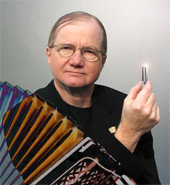 From: Mario Bruneau's Studio
Hi,
I've been tuning pianos for more than 35 years.
I know how frustrating it could be to spend thousands of dollars on piano tuning formations and/or to find so called "specialists" that guarantee miracle results but fail to deliver.
Offers on the Internet abound but the fact remains: the glaring lack of seriousness and competence often encountered. Especially those that offer you to learn piano tuning with an eBook as sole support!
To hear and understand the different acoustic phenomena involved in piano tuning, it is imperative that the sound and recording of the tutorial be nothing less than perfect.
I've seen too many incompetent tuners in my career and with this tutorial, I want to contribute to unmask this incompetency.
The base on which piano tuning rely is the mastery of gestures associated with the practice. These gestures and movements are virtually impossible to demonstrate only in words. Even illustrations are sometimes insufficient.
This is the reason why many professionals agree that:
"The piano tuner profession can not be learned other than with a specialist who follows you step by step."
This is also my opinion and it is with this state of mind that I've created...


What you will learn by following PianoTuningHowTo
You will learn how to tune your own piano risk free.
You will learn how to set the tuning pin for a stable tuning.
Your tuning will be more stable thanks to a proper tuning lever manipulation.
You'll understand the forces involved to raise a piano up to tuning standard with only two tunings.
You'll know enough to teach your current piano tuner what he still fails to know.
You will have a strong enough base to foresee the possibility of a career.
With the help of MultiMedia, everything will finally be clearer to you!
You'll know if your present tuner is competent or not.
Finally, your knowledge will put you in an advantageous position to better express your expectations to your tuner.


5 Videos
Each of the 5 videos contains well organized specific chapters. They share the 11 chapters total.
eBook Complete Transcript
This 150 pages eBook transcript is easy to print and carry with you anywhere even on your mobile device.
Audio MP3 Book
The complete MP3 audio transcript file you can listen anywhere or while driving your car for example.
BONUS
If you act NOW, you will get this “PIANO TUNING” book for FREE. A simple and accurate method for amateurs from J. Cree Fisher that will help you further.

I don’t believe at the approach of keeping silent the theoretical part in making you believe that piano tuning is easy and just technical. This attitude doesn’t service anyone. Neither you and certainly not the “expert” who delivers it.
There is an interesting theoretical knowledge that you must assimilate to eliminate any insecurity facing the piano tuner trade.
Rest assured, I am good at transmitting the knowledge. I am very curious by nature and science always fascinated me. You will see, I shall convey this passion to you and together, we will have fun!
So don’t be surprised if I teach you how to silently close a door as an example!
“Hi, I’ve taken the course in my home and I’ve learn more in 3 hours than since 1 year and a half learning by myself! ” Mario is really passionate and answer all questions. A must for anyone who wants a solid foundation. Again, thank you Mario.

SÉBASTIEN
Ste-Anne-Des-Plaines, Québec.
“Thank you for your site, really welcome to demystify piano tuning and make it accessible!”

BRUNO MORTGAT
France
BERCHMANS
Canada
“Good idea to make this precious knowledge accessible.”
-
EBOOK ONLY
-
$77
per eBooks - eBook
- Easy to read
- PDF format
- Carry on your SmartPhone
- Refunded if you upgrade
-
COMPLETE FORMATION
-
$157
per complete packages - The complete package!
- 5 Videos
- MP3 Audio
- 150 pages eBook
- BONUS eBook
-
AUDIO ONLY
-
$57
per audio files - AUDIO
- MP3 format
- Carry anywhere
- Listen while driving
- Refunded if you upgrade
Although this tutorial is quite advanced, it is mainly geared towards the complete beginners.
Because I don't believe in "stripped off" teaching. Because I respect you, nothing is left unanswered.
- a great physical strength to change the position of the 230 pins in a piano
- the delicacy of a butterfly
- a rigorous, scientific precision
- an above normal artistic sensibility
- a good sense of rhythm
- the capacity to concentrate fully for an hour and a half
- a musical ear
Sorry you asked?
No but on the piano tuning tools page of this site, you will find the basic tools you need to start.
This training comes with 5 videos but it is also bundled with an easy to read eBook you can read while in a waiting room for example. It even comes with an MP3 audio file you can carry and listen to the complete tutorial while driving your car. Not to mention this other FREE bonus eBook on piano tuning by a famous technician.
INSTANT ACCESS! As soon your payment on secure server is completed, you will receive a confirmation with a link to the download page. Since the tutorial is downloaded to your machine, you will have 7/24 access so you can learn at your own pace.
I charge $105US but as an apprentice, you might want to lower your rates to something like $70US at the beginning. Once you reach a good understanding of the trade and your skills are up to standard then you can charge as much as I do. Don't forget to charge more if there the client is at an hour drive from your business. I don't believe you can honestly tune more than 4 pianos/day but figure it out by yourself, 4 X $70 = $280US/day is NOT bad!
This all depends on you abilities and talent. Generally in the first year, you WILL NOT charge anything to tune your friend's piano or the Church Hall piano. People are kind enough to let you "practice" on their beloved piano so charging them a fee on top make no sense. You can accept tips though!
WHAT?
Mario,
What is the best practice in regards to the time to be given between option 2 and 3 tunings?
Hello Ethan,
NO TIME NEEDED!
It is a false theory that the piano’s strings need some time to “settle”
Those people who state this are no good at piano tuning lever manipulation and know little about the physics surrounding piano tuning.
After the option #2, the piano is at 440Hz just like if it was tuned less than a year ago so at this point, you tune with a “precise” regular tuning
Mario,
I option 3:
“This note at the end of the middle section is important. The second and third strings have been tuned at the beginning, and if they are out of tune now, this mean there might be a problem.”
When were two strings in the same note tuned t the beginning?
Hi Ethan,
The option #3 is when you perform a “regular” tuning. That is, the piano is on pitch A=440Hz and you want to fine tune it.
You use the temperament strip to mute the first and third strings of ALL THE MIDDLE section. But the very last note on the treble side, you can NOT mute the third string with the temperament strip for obvious reasons. So when you have finished to lay out the temperament on the first octave of this middle section of the piano, you tune all the upper octaves by ear tuning the second string of all the notes since the temperament strip is still on place. When you arrive at the very last note i.e. the note on which the temperament strip can not mute the third string, you need the papp mute to tune first the third string to the octave below and then, the second string in unison and beatless to the third string. So this unison of the two last string is perfectly tuned and beatless at this point.
After that, you tune all the unison by ear and beatless progressively removing the temperament strip starting on the first note of this middle section. So you will be building up the general tension of that section and it is possible that it will modify the very last unison you performed before on the very last note of the middle section. So before removing the temperament strip of that note, you check if IT IS STILL IN PERFECT UNISON AND BEATLESS. If it is not, then there could be a problem like, you under-evaluated the general pitch of the piano when you decided to perform a regular and precise tuning. It could be that the piano was at A438Hz when you started and you thought it could be tuned with only one tuning. So state of this last note of the middle section is important to evaluate your progress in the regular-precision tuning.
👍🙏
Mario,
Does the formation you teach here take the individual piano’s inharmonicity into account at any stage?
Hi Ethan,
The inharmonicity is explained at p34. We can read:
Theoretically nodes occupy some space and thus slightly shorten the segments of the string. It is this phenomenon that creates the inharmonicity of the piano.
The harmonics then have a tendency to go sharp.
This is why you will always tune with a certain ‘stretch’
WARNING! This will happen naturally, since your aim when tuning octaves will always be to tune
« without any beats »
You will « stretch » without doing anything special!
But the different inharmonicity pertaining to any piano in specific is not covered.
Perfect. Thanks!
Mario,
What would be the hand and body position when tuning a grand?
Hi Ethan,
If you’re 5’10 and under, you will tune standing up. If you are taller, you probably want to tune sitting down.
The tuning lever position:
The head is toward you and the handle is away from you like on the strings side. You hold it from 12 o’clock to 2 o’clock.
regards
And you would still advocate the impact technique – adjusted to this position?
Yes sure!
The impact tuning lever technique is better IMO in any tuning position.
Mario,
Can you please explain this statement:”When we raise a piano that has fallen off pitch, precision is not 100% necessary for the unisons.” Why would that be?
Hi Eitan,
Thanks for your payment and for dropping by.
When you raise the pitch of a piano, your goal is just to bring up the tension to 20 tons and put the piano to A=440Hz so precision is not necessary since you will perform a regular and precise tuning right after this first raising the pitch tuning.
Also this first tuning is mostly done with the electronic tuning device (ETD) so you won’t tune by ear the octaves that much.
But when performing the second and precise tuning, you really need the unisons perfect because you will rely on them for tuning the octaves by ear.
regards
Thank you. I very much enjoyed the read, and am now eager to start tuning just as soon as the tools arrive. I very much enjoyed the expertly composed materials. You provide an invaluable compaction of years of experience and learning, into a easy to follow guide – and at a very fair price.
Thanks Eitan,
I appreciate people like you taking the time to express your feelings about my piano tuning tutorial.
Have fun!
Loved the course. Will there be any additional courses. I would love to see an aural tuning course that spreads the temperment
Hi Nick,
Thanks for your kind words.
I wont create another tutorial for the aural temperament tuning.
But, the 4th chapter explain in details the equal temperament so you can figure out by yourself how to do it by ear on the piano.
Beats are explained in details for you to understand the theory behind establishing the equal temperament by ear in the first octave of the middle section of the piano.
regards
I asked a question about hammer technique but the website removed it for some reason. I was asking if your course goes into greater detail than the youtube videos do?
Sorry for that. Keep in mind that whenever you leave a comment on any website, your comment needs to be approved manually. Hence the delay responding.
I watched the hammer technique videos on your youtube channel but I do not understand what is happening. It just looks like you are rubbing your palm against the ball of the hammer. I see no movements. Does your tuning course go into greater detail?
Hi Nick, the movement of the tuning lever is very small that is why you hardly see any.
This is just a small part from the complete tutorial which goes in greater details.
thank you. Last question. I have a carbon fiber tuning hammer. It was super expensive but it doesn’t have the ball end. Should I purchase one that does?
You write: “Last question” No problem here. You can ask as many questions you like. I am here to help people learn piano tuning.
No need to get another tuning lever. The carbon fiber tuning levers usually do have a “pear” type of handle at the top of the tuning lever.
So with your carbon fiber tuning lever, you will be able to experiment both tuning lever manipulation techniques that is: the “Inertia” standard technique almost all piano tuners use and the “Impact” technique that I recommend.
Do the 5 lessons come on cds or cd video or are all five by internet for computer?
Hi Francis,
All the content is delivered from Cloud to your computer.
5 videos covering the 5 chapters
1 pdf eBook file with all the same content you can print
1 audio mp3 file with all the same content you can listen in your car or elsewhere.
1 BONUS eBook of Piano Tuning
You also have the option to get them delivered to your home by regular mail on USB media for $257 USD.
regards
Dear Mario,
I just come up with an idea about if different tuning procedures would affect tuning stability.
For example.
1. We play the key first, then, like listening/waiting for 0.5 second, then we start to pull or push the tuning hammer.
Or
2. We play the key and pull/push the tuning hammer simultaneously.
It seems these two different procedures would result in variation of string vibration.
In my opinion, the first procedure means the string is already vibrating before tuning hammer starts to move.
And in the second procedure, the tuning hammer moves when the string is silent/still, no vibration.
Which might yield better tuning ability?
Please kindly share your thoughts with me.
Thank you in advance.
Best regards,
Kuo-Cheng
Hi Kuo,
The tuning stability comes with mastering the tuning lever manipulation, not with the two situations you describe here.
In both situations you describe here, you start manipulating the tuning lever immediately.
For #1 situation, in the tutorial I explain that whether or not you’re manipulating the tuning lever, it is after 5 seconds that your hearing will be more accurate and precise. At the very beginning after playing the note, you change pitch broadly and towards the 5th seconds, your range of going up or down the desired pitch will narrow and you will be more precise. Usually when you finish tuning the string at the 5th or more seconds, you know that the tuning is PERFECT and you have no doubt about it because you heard the difference so much better than for the 4 first seconds of the process.
No, you start manipulating the tuning lever right away.
Yes but if you finish placing the string after the 5 first seconds, you will be more accurate. But also, you will find it easyer to tune after 5 seconds because your ears will hear more precisely than at the beginning after playing the note.
Absolutely not. Never you move the tuning hammer when the string is not into vibration. Too dangerous to break a string.
#1 situation yields better results. But you will sometimes achieve tuning the string in the first 5 seconds. This rule of “after 5 seconds” is just a basic tip not really a “rule” or a method. Just a tip to use like when you are having a hard time tuning a specific string. At one point in your tuning experience, you will notice that and it will be obvious then and you will understand it better.
Hello Mario, I have always wanted to learn the proper aural tuning theory and method. I have successfully been tuning with tunelab for many years. Recently I want to learn the professional way of tuning not Fischer’s method which I also used before. I think I understand how to get the temperament using the aural 4th and 5th interval method but I want to be able to master it at ease. Also I think I understand how to set A to 440 tuning fork by using tuning octave above the tuning fork A and using the rule of same number of beats between M3 and Major 10. It was on youtube. Anyway to make my story short, I am interested in learning the complete aural tuning tricks of the trade with just the A tuning fork and not Fischer’s setting the temperament of octaves covering middle C with the C tuning fork and using the dampened 5th to tune. I want to learn the proper way of tuning using internals and how to use internals to double check my tunings as well. Do your videos cover these aural techniques in depth. I am not interested in learning how to use Petersen tuning machine, i.e. I already am using the best visual tuning app, tunelab and want to tune like in the RPT exam. However, I am too old and retired already and not interested in pursuing something like what the piano technician academey offers to become a successful professional piano tuner. I am just interested in able to tune with the proper aural methods.
Hi Joel,
My tutorial targets beginners and it does not cover the aural setting of the temperament in practice but all the theory pertaining to the equal temperament is covered in deep.
You will have a better understanding of what to listen to and what harmonics are involved in setting the equal temperament by ear.
Plus, your general knowledge of the piano will be highly improved as well. Both the physics involved and the historic elements to better understand the piano’s evolution.
But, you won’t see me tune the equal temperament by ear on this tutorial.
regards
can I upload your course on my chrome goggle computer?
Hi Francis,
Yes sure. The videos are compatible in all machines. Same for the pdf and the audio files.
Thanks for dropping by.
Hi Mario, could I receive a completion certificate of your courses?
Best regards
I. George
Hi George,
We have no record here about you purchasing the Piano Tuning Tutorial.
I don’t send completion certificate either.
regards
Hi Mario,
thank you for your profund work. Teaching the impact tuning method seems to me the best, the one and only way to handle the pins in the pinblock.
I didn’t watch every minute of your videos until now, but I miss more detailed practical exercise instruction video how to push the lever with my hand/palm/fingers, not only for upright piano but for grand piano too.
I am a bit disappointed for there is no more instruction for that in your videos than in your free youtube video which is to me really the essence of your work. But I realized you do it with a free wrist and an all over good posture – very convincing. I am also a teacher of F.M. Alexander technique so I estimate good use of myself and the tools.
I am a violinist in Hamburg Germany playing with Kent Nagano who is in Montreal too. I like tuning our upright Hoffmann and our Steinway B myself since nearly 30 years with ETD, with better and better results. From beginning I was aware of never bending but only turning the pins, but my turning was too slow. I realized late but not too late how valuable for best sound totally pure unisons are. I used Tunelab and Entropy tuner but now prefer Easy Piano Tuner, (Android) which is simple and gives very good results.
I can really recommend Easy Piano Tuner for anybody who does not completely tune aurally.
The Peterson IStroboSoft you recommend doesn’t calculate any inharmonycity or stretch, right?
Some weeks ago I bought Jahn carbon tuning hammer with extra extension and Mahagony ball, working much easier than my standard tools before.
Can’t stop playing one Haydn sonata after the other in the night, enjoying the sound, really excited after tuning 🙂
The pure impact tuning method is still quite new for me but totally convincing, pure unisons and permanent.
I would like to thank you for you emphasizing, making better known and teaching this method.
Jens
Hi Jens,
Thanks for your kind words and input to my piano tuning tutorial.
I started tuning pianos with the inertia method like everybody but soon shifted to the impact method without being totally conscious of the switch at first. The switch from inertia to impact method came naturally.
It is only in Vienna when I did my training that Sibin Slatzkovick presented me with a ball handle tuning lever upon noticing my impact type tuning lever manipulation.
Yes indeed, unisons can be tuned but can also be perfectly tuned. There is a big difference. Tuning beatless is NOT the only goal a piano tuner should aim at. You have to take into consideration the timbre change that occur when a unison is PERFECT and nothing less thant PERFECT! I am glad you did grasp this notion.
You write:
You’re right, iStroboSoft from Peterson does NOT calculate inharmonycity or stretch but you don’t need this feature. This is all done by ear! The stretch will occur naturally if you do TUNE OCTAVES BEATLESS.
Carbon tuning hammers are the best for precision and comfort.
I wish you the best of fun tuning pianos with the impact method.
best regards
Mario Bruneau
Hi Mario,
thank you.
Few days ago I came to tune a friend’s old Danish upright piano. My experience was that nearly every pin was unusually loose, I never had a piano like that before. All my intentions were to maintain the pure impact method. But especially in the treble even the tiniest impacts to tune down were too much, and I’ve always overstepped the exact point. In this situation, I felt forced to return to the inertia method.
I feel we all have to learn what is really working in a new situation. What are you doing when handling with very loose pins? Any advice?
Best wishes
Jens
Hi Jens,
My take on this matter is that if the impact method don’t work on a situation of too loose pins, you need to address the tightness of the pins.
You have to check if there is enough space between the plate and the string coil around the pin.
If there is enough space, you can punch the pin further inside the pinblock to tighten the pin.
regards
Mario Bruneau
Hi, can you send me a link to the download page, it say fail 404 no file, when i try
Thanks
Hi Lars,
Thank you for your payment.
Sorry about the inconvenient.
We’ve just completed an overall configuration change in both the website and server, hence this error message.
Welcome to PianoTuningHowTo.
Mario Bruneau
Volevo chiedere quanto costa il corso completo in EURO.
GRAZIE
Ciao, grazie per il tuo commento. Il corso completo è di 205 €, ma nota che è disponibile in inglese e in francese troppo.